
 In today’s global meetings and events industry, inclusivity is no longer a “nice to have.” It is a fundamental part of designing meaningful, impactful experiences. From registration through to the onsite experience, every touchpoint shapes how attendees feel welcomed, represented, and supported.
At BestCities Global Alliance, we believe business events have the power to create positive change. Designing inclusive events is an important part of that mission. It helps ensure every delegate, speaker, and participant can fully engage, contribute, and connect. This work closely aligns with BestCities’ commitment to SDG 10: Reduced Inequalities, which focuses on creating more equitable and accessible opportunities for people of all backgrounds and abilities.
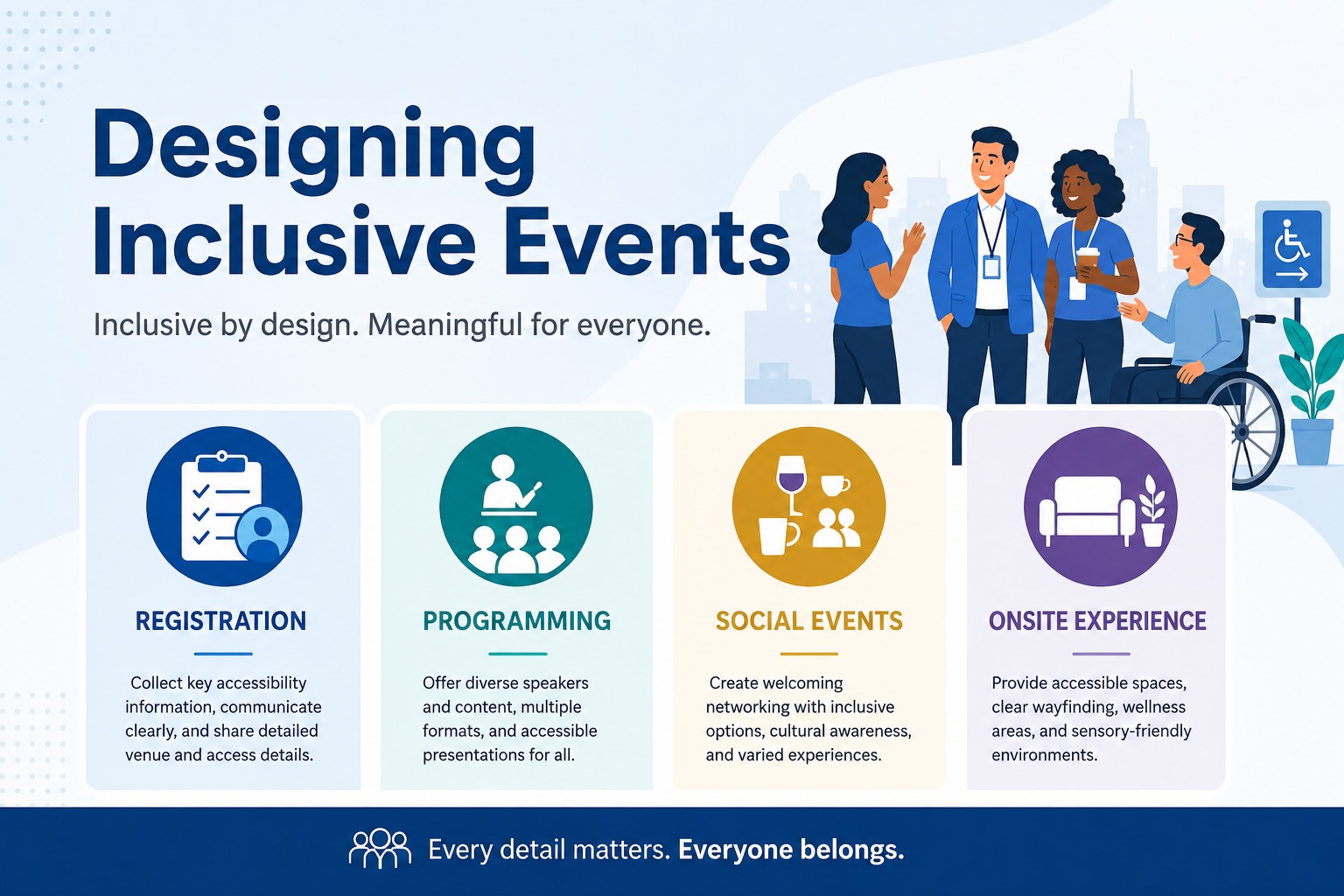
The “Designing an Inclusive Event” framework highlights practical ways event organizers can embed accessibility and inclusivity into every stage of the attendee journey.
Why Inclusive Event Design Matters
Inclusive events create better experiences for everyone, not only attendees with visible accessibility needs. Thoughtful event design can improve engagement, encourage broader participation, and create environments where diverse perspectives are heard and valued.
An inclusive approach can also help organizers:
- Reach wider and more diverse audiences
- Improve attendee satisfaction and retention
- Support equity and representation within the industry
- Create safer and more welcoming networking environments
- Strengthen the long-term legacy and impact of events
Importantly, inclusivity should not be treated as a standalone initiative. It should be integrated into the planning process from the very beginning.

Start with Inclusive Registration
The registration process is often the first interaction attendees have with an event. It sets expectations and signals whether attendees’ needs will be considered throughout the experience.
The inclusive events framework recommends creating registration processes that are accessible, transparent, and welcoming.
Key considerations include:
- Providing space for attendees to share accessibility requirements, dietary preferences, and pronouns
- Clearly explaining why information is being collected and how it will be used
- Offering multilingual communication where possible
- Using plain language and accessible website design
- Sharing detailed venue information, including wheelchair access, transport options, and accessible accommodation nearby
This level of clarity can significantly reduce uncertainty for attendees and help them feel more confident attending your event.
Build Inclusive Programming
Representation matters on stage and within the program itself. Diverse speakers, moderators, and facilitators help ensure a broader range of perspectives and lived experiences are reflected in discussions.
Inclusive programming also means thinking beyond traditional presentation formats. Organizers should consider multiple content formats and ensure panels are representative and accessible.
Practical ways to strengthen inclusivity within programming include:
- Curating diverse speaker lineups across gender, geography, ethnicity, age, and professional background
- Including content tracks that reflect different lived experiences
- Offering varied session formats such as workshops, roundtables, and interactive discussions
- Providing captioning and interpreters where appropriate
- Ensuring presentation slides use readable fonts, strong contrast, and accessible color choices
- Training staff and moderators on respectful language, pronoun use, and supporting access needs
- Creating multiple feedback channels for attendees
Accessibility should also extend to digital participation. Hybrid and virtual components can create additional opportunities for attendees who may face barriers to travel or onsite participation.
Rethink Social and Networking Experiences
Networking is often one of the most valuable aspects of business events, but traditional formats may unintentionally exclude some attendees.
Through the inclusive events framework, BestCities Global Alliance encourages organizers to move beyond “one-size-fits-all” networking experiences.
This can include:
- Offering alcohol-free networking options
- Incorporating culturally inclusive experiences
- Providing both daytime and evening networking opportunities
- Creating low-stimulation environments alongside high-energy events
- Catering for diverse dietary and cultural requirements
- Facilitating smaller interest-based meetups
Not every attendee feels comfortable in large, crowded networking settings. Providing a mix of environments and formats allows more people to participate in ways that suit them best.
Create a Thoughtful Onsite Experience
The physical event environment has a major impact on attendee comfort and participation. Inclusive onsite design requires careful consideration of accessibility, sensory needs, and attendee wellbeing.
The framework highlights several important focus areas for onsite experiences.
Event planners should consider:
- Providing quiet rooms, wellness areas, and nursing spaces
- Ensuring clear signage and easy wayfinding throughout the venue
- Addressing neurodiversity through thoughtful lighting, sound, pacing, and recovery spaces
- Minimizing unnecessary sensory overload where possible
Simple adjustments can make a significant difference for attendees who may experience anxiety, sensory sensitivities, fatigue, or mobility challenges.
Working closely with venues and local destination partners can also help identify accessibility opportunities and potential barriers early in the planning process.
Inclusivity Is an Ongoing Process
Designing an inclusive event is not about achieving perfection overnight. It is about continuously listening, learning, and improving.
The most inclusive events are often those where organizers actively seek attendee feedback, engage with diverse communities, and remain open to adapting their approach over time.
As the global events industry continues to evolve, inclusivity must remain at the center of how we design experiences, build communities, and measure success.
By embedding accessibility and inclusivity into every stage of the attendee journey, event organizers can create environments where more people feel welcomed, supported, and empowered to participate fully.
That is not only good event design. It is good leadership.
